
Starting a small business is a big dream for many people. But for low-income entrepreneurs, money is often the biggest problem. You may have a great idea, strong skills, and the will to work hard—but without funding, it can feel impossible to move forward.
The good news is this: in 2026, there are many small business startup grants and funding programs made to help people who do not have a lot of money. Some of these come from the government, some from states and cities, and others from private companies and nonprofits.
This guide will help you understand:
What small business grants really are
Who can apply for them
The best government small business funding options
How do small business grants by the state work
Other smart funding choices if grants are not enough
And how to apply it the right way
Let us start from the basics.
What Are Small Business Startup Grants?
A small business startup grant is money given to help you start or grow a business. The best part? You usually do not have to pay it back.
Grants are different from loans.
A loan must be repaid with interest.
A grant is financial help that is awarded for a purpose, like starting a business, hiring workers, or buying equipment.
Most grants come with rules. For example, the money may only be used for:
Business tools or machines
Rent for a small shop or office
Training or marketing
Building a website
Hiring workers
Because grants are “free money,” many people apply. That means competition can be strong. But if you prepare well and apply to the right programs, your chances can be much better.
Who Can Apply for Low-Income Business Grants
Many programs are made especially for people who:
Have low or limited income
Are starting a new small business
Run a very small or home-based business
Live in underserved or rural areas
Are women, minorities, veterans, or people with disabilities
Each program has its own rules. Some look at:
Your personal income
Your business income
Your location
Your business type
Your business plan
In most cases, you will need:
A simple business plan
Basic personal and business details
Proof of identity
Sometimes, proof of income or financial need
Do not worry if you are just starting. Many programs are made for beginners and first-time business owners.
Federal Small Business Grants and Programs
The U.S. government is one of the biggest sources of government small business funding. While the government does not give grants directly to every business, it supports many programs that do.
Grants.gov
Grants.gov is the main website where federal grant opportunities are listed. Here you can find:
Business-related grants
Training and development grants
Community and economic development programs
Not all grants on this site are for small businesses, but some are. It is a good place to search and learn what is available in 2026.
SBA-Supported Programs
The Small Business Administration (SBA) does not usually give direct grants to start a business. But it supports many programs that:
Help small businesses grow
Offer training and counseling
Support research, technology, and community projects
Some programs connected to the SBA or other federal agencies can still lead to grant opportunities, especially in:
Research
Manufacturing
Technology
Community development
Special Federal Programs
Some federal programs focus on:
Rural businesses
Low-income areas
Innovation and technology
Job creation
These may not always be called “small business startup grants,” but they can still provide important funding or support.
Read- Small Business Grants For Single Mothers and Women-Owned Startups
Small Business Grants by State and City
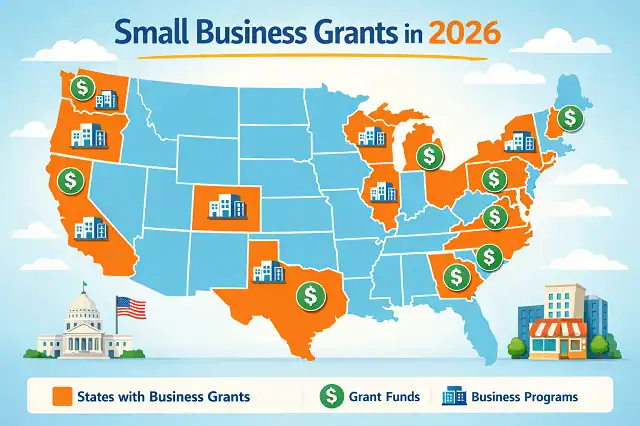
One of the best places to look for help is close to home. Many states and cities offer small business grants by state or local programs to support new businesses.
Why State and Local Grants Are Important
Local grants often:
Have less competition than federal grants
Focus on helping local people
Support small shops, service businesses, and startups
Want to create jobs in the community
You may find grants from:
State economic development offices
City business departments
Local business support agencies
Community development groups
Some programs help with:
Rent and shop setup
Equipment and tools
Hiring workers
Training and business skills
To find these, check:
Your state’s official website
Your city or county business office
Local business support centers
Grants for Special Groups of Entrepreneurs
Many funding programs are made to help people who often face more problems starting a business.
Women-Owned Business Grants
There are many programs and private groups that support women entrepreneurs. These may offer:
Small grants
Business competitions
Training plus funding
Mentorship and support
Read- Free Grants For Women-Owned Small Businesses-Funding Guide
Minority and Underserved Entrepreneurs
Some grants focus on helping:
Minority-owned businesses
Businesses in low-income areas
Immigrant entrepreneurs
These programs aim to create more equal chances in business.
Veterans and Disabled Entrepreneurs
There are also special programs for:
Military veterans
Service-disabled veterans
People with disabilities
These programs may offer grants, training, or low-cost funding options.
Nonprofit and Corporate Small Business Grants
Not all funding comes from the government. Many nonprofits and companies offer corporate small business grants and private grant programs.
Nonprofit Grants
Nonprofit groups often focus on:
Community growth
Fighting poverty
Supporting businesses in poor areas
Helping specific groups (like women or youth entrepreneurs)
They may offer:
Small startup grants
Business training plus funding
Support for tools, marketing, or skills
Corporate Grants
Some big companies run grant programs to:
Support small businesses
Help local communities
Encourage new ideas
Improve their brand image
These programs often:
Run once or a few times a year
Ask for a simple application or story about your business
Choose winners who get cash prizes or grants
Business competitions and pitch contests also fall into this group. Even small prizes can make a big difference when you are starting out.
Other Smart Funding Options
Grants are great, but they are not the only choice. Many low-income entrepreneurs use other funding options, too.
Microloans
Microloans are small loans, often:
From community lenders
From nonprofit groups
From special small business programs
They usually have:
Lower amounts
Easier rules
More flexible terms than big bank loans
Community and Nonprofit Lenders
Some local groups offer:
Small business loans
Low-interest loans
Business support and advice
They care more about your idea and effort than your perfect credit score.
Crowdfunding
Crowdfunding means raising small amounts of money from many people online. You can:
Share your business idea
Ask friends, family, and the public to support you
Offer small rewards or thanks
This can work well for:
Creative businesses
Product ideas
Community-based projects
Business Credit Cards and Small Loans
These can help with:
Small startup costs
Buying tools or supplies
Covering early expenses
But be careful. Unlike grants, these must be paid back.
How to Apply for Small Business Grants Successfully
Applying for grants can feel scary, but it does not have to be.
Step 1: Get Your Basics Ready
You should prepare:
A simple business plan
A clear idea of what your business does
A list of what you need money for
Basic personal and business details
Step 2: Find the Right Grants
Do not apply for everything. Focus on:
Grants for beginners
Grants for low-income or small businesses
Local and state programs
Programs that match your business type
Step 3: Follow the Rules Carefully
Always:
Read the instructions
Answer all questions
Send all required documents
Apply before the deadline
Many people are rejected just because they miss a step.
Step 4: Keep Your Answers Simple and Honest
You do not need big or fancy words. Just explain:
What your business is
Why do you need help
How the money will be used
How does your business help you or your community
Tips to Improve Your Chances of Getting Funding
Here are some simple tips that really help:
Start small and grow step by step
Apply to local programs first
Keep your business plan clear and simple
Ask for help from small business support centers
Do not give up if you are rejected once
Apply again when new programs open
Many successful business owners were rejected several times before they got help.
Final Thoughts: You Are Not Alone
If you are a low-income entrepreneur, starting a business can feel very hard. But in 2026, there are more small business startup grants, local programs, and funding options than ever before.
From federal small business grants and small business grants by state, to nonprofit help and corporate small business grants, there are many paths you can try. And if grants do not work out right away, microloans, community lenders, and crowdfunding can still help you move forward.