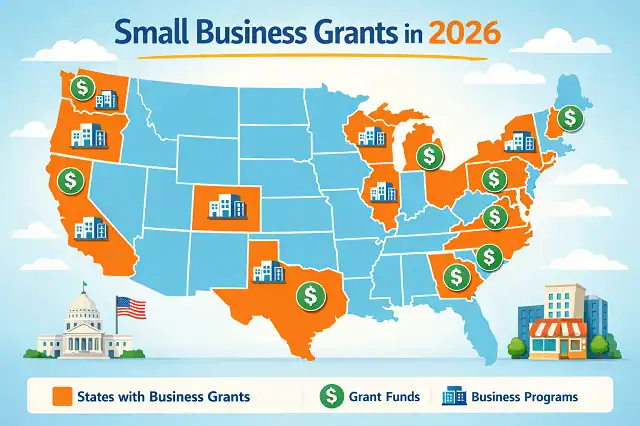
Small Business Startup Grants 2026: Find the Best Funding
Small business startup grants can create valuable opportunities for entrepreneurs who are launching new companies, developing innovative products, entering specialized markets, creating jobs, expanding access to services, or building projects that align with public and economic-development priorities. The right funding strategy starts with a clear understanding of the startup, the project, the applicant, the location, and the program objective.
This article answers one central question: How can a new entrepreneur find, evaluate, and pursue legitimate startup grants that match the business, project, and eligibility requirements? It brings together the most important federal, state, local, nonprofit, private, research, export, rural, and founder-focused funding pathways while giving entrepreneurs a practical system for deciding where to start.
Federal opportunities can be researched through Grants.gov (Grants.gov), while the U.S. Small Business Administration (SBA) identifies specialized grant programs involving scientific research, exporting, manufacturing, and organizations that support entrepreneurship. State economic-development agencies, local governments, nonprofit organizations, foundations, corporations, and specialized programs add further funding pathways for startups with the right profile and project.
What Are Small Business Startup Grants?
Small business startup grants are funding opportunities connected to a defined purpose such as research, innovation, exporting, rural economic development, entrepreneurship, manufacturing, workforce development, community development, or another objective established by the funding organization.
The term startup grant therefore covers several different funding models. A federal research program may award funding to an eligible small business. A rural economic-development program may fund an eligible organization whose project benefits rural businesses. A state program may support entrepreneurship or export development. A private organization may sponsor a competition for founders working in a particular industry.
| Startup Funding Category | Typical Purpose | Potential Applicant |
| Federal research funding | Scientific research, technology development, and commercialization-focused projects | Eligible small businesses under the applicable solicitation |
| Export-development funding | Qualifying international-market activities | Eligible small businesses through participating state or territory programs |
| Rural development funding | Projects that support rural businesses and economic development | Eligible public, nonprofit, tribal, cooperative, or other organizations under the specific program |
| State startup grants | Entrepreneurship, innovation, workforce, industry, or economic-development priorities | Eligible businesses or organizations under state rules |
| Local business grants | Business districts, job creation, neighborhood development, entrepreneurship, or local economic priorities | Eligible businesses or organizations under local rules |
| Private startup grants | Entrepreneurship, innovation, community impact, founder groups, or industry-specific objectives | Eligible entrepreneurs or businesses under sponsor rules |
| Business-support programs | Counseling, training, mentoring, planning, and funding connections | Entrepreneurs and small businesses using eligible support networks |
The key decision is to identify the funding structure that matches the startup’s actual objective. A research startup, an online retailer, a rural service company, and an exporting manufacturer can have very different funding profiles even when all four are new businesses. Entrepreneurs comparing broader federal opportunities can also review federal small business grants before narrowing the search to a startup-specific program.

Why Startup Stage Matters
A founder with a business idea may have different documentation and funding opportunities from a legally formed company with a prototype, customers, research capability, export plans, or established operations.
Startup stage affects the type of project that can be documented, the records available to support an application, and the programs that may be relevant.
Entrepreneurs at the earliest stage can use small business grants for beginners as a supporting research layer while this pillar remains focused on startup funding strategy.
How Does Startup Grant Funding Differ From Other Startup Capital?
Startup capital can come from grants, loans, microloans, owner capital, investors, crowdfunding, competitions, and other financing arrangements. Each source has a different structure, purpose, application process, and financial effect on the business.
| Funding Source | Structure | Best Starting Question |
| Grant | Funding connected to program rules and approved activities | Does my startup and project fit the funding opportunity? |
| SBA-backed loan | Borrowed capital repaid under agreed loan terms | Can this financing structure support my startup’s capital needs? |
| Microloan | Smaller business loan provided through an approved intermediary | Would a smaller amount of structured financing fit the launch plan? |
| Equity investment | Capital exchanged for an ownership interest | Does outside investment fit my growth strategy? |
| Crowdfunding | Capital raised from customers, supporters, or investors depending on the model | Can the product, audience, or mission attract community participation? |
| Business competition | Prize or capital awarded through a competitive pitch or application | Does the startup match the sponsor’s competition criteria? |
| Owner capital | Founder-funded business capital | How much capital can I contribute to the launch plan? |
The U.S. Small Business Administration (SBA) provides information about grants, investment capital, and other funding opportunities. SBA also operates a Microloan program through approved intermediaries for eligible small businesses.
Which Federal Programs Can Fit a Startup?
Federal startup-related funding is highly program-specific. The most useful federal opportunities depend on what the startup is developing, where it operates, who the applicant is, and which federal objective the project addresses.
Small Business Innovation Research
Small Business Innovation Research (SBIR) is a major federal research pathway for eligible small businesses conducting qualifying scientific research and development.
The U.S. Small Business Administration (SBA) identifies SBIR as a federal research and development grant program designed to encourage small businesses to conduct scientific research addressing federal objectives with commercialization potential.
A technology startup should therefore evaluate the actual research project, federal agency topic, applicant requirements, registration requirements, and solicitation instructions before treating SBIR as a startup funding option.
Current Small Business Innovation Research (SBIR) information should be reviewed before preparing an application.
Small Business Technology Transfer
Small Business Technology Transfer (STTR) is a specialized federal research pathway that involves collaboration between an eligible small business and a research institution.
The official SBIR/STTR eligibility materials require participating companies to complete applicable registration and meet program eligibility requirements before submitting an application.
Review current Small Business Technology Transfer (STTR) information and the relevant agency solicitation before planning the research partnership.
State Trade Expansion Program
State Trade Expansion Program (STEP) is relevant to small businesses pursuing qualifying international-market activities.
The U.S. Small Business Administration (SBA) explains that STEP awards are provided to states and territories, which then support eligible small businesses with approved export-development activities. Current SBA information describes STEP as a program for established U.S. small businesses.
For a startup, STEP becomes more relevant once the business has developed the operational foundation and export activity required by the applicable state or territory program.
Rural Business Development Grants
Rural Business Development Grants (RBDG) support targeted technical assistance, training, and other activities that promote the development and expansion of small and emerging private businesses in rural areas.
The U.S. Department of Agriculture Rural Development (USDA Rural Development) states that individuals and for-profit businesses are not eligible to apply directly for RBDG awards. Eligible applicants include rural cooperatives, state agencies, towns and communities, nonprofit corporations, institutions of higher education, and federally recognized tribes.
This makes RBDG particularly relevant when a startup is part of a broader rural economic-development project led by an eligible organization.
SBA Entrepreneurship Support Programs
The U.S. Small Business Administration (SBA) works with resource partners that provide counseling, training, mentoring, and other entrepreneurial support.
These networks can help entrepreneurs improve business planning, understand funding options, prepare for growth, and connect with local resources. They include Small Business Development Centers, Women’s Business Centers, SCORE, Veterans Business Outreach Centers, and other SBA-supported networks.
Specialized 2026 SBA Funding Opportunities
SBA’s 2026 funding landscape also includes specialized competitions and grant initiatives connected to manufacturing, supply chains, entrepreneurship support, and other targeted objectives.
For example, SBA announced the Supply Chain Acceleration and Logistics Enablement (SCALE) Program in July 2026, while other 2026 initiatives have focused on manufacturing training and support organizations. These opportunities illustrate why startup founders should check the current SBA and Grants.gov listings rather than relying on an old list of programs.
What Does Startup Grant Funding NOT Cover?
Each funding opportunity establishes its own eligible activities, applicant rules, allowable costs, deadlines, and award conditions. A startup should therefore evaluate each expense against the current program rules.
What SBA Grants Do NOT Cover
The U.S. Small Business Administration (SBA) states that the federal government does not provide SBA grants for starting and expanding a business. SBA grant activity is focused on specialized areas such as scientific research, community entrepreneurship support, exporting, and manufacturing-related initiatives.
This means a conventional startup should evaluate state, local, nonprofit, private, specialized federal, and financing pathways alongside SBA resources.
What RBDG Does NOT Cover
Rural Business Development Grants do not provide direct awards to individual for-profit businesses or individuals.
An eligible organization can apply for a qualifying rural project that benefits small and emerging businesses, which can create an indirect pathway for rural entrepreneurs.
What SBIR and STTR Do NOT Cover
SBIR and STTR are specialized research and development programs. They are designed around qualifying federal research objectives rather than general startup operating capital.
A technology company becomes relevant to these programs when its research project, business structure, ownership, registration, and other requirements align with the current agency solicitation.
What STEP Does NOT Cover
STEP is an export-development pathway rather than a general startup operating fund. The applicable state or territory program determines eligible activities and application procedures.
What Grants.gov Does NOT Do
Grants.gov (Grants.gov) is a federal grant search and application platform. It does not represent one universal startup grant.
Grants.gov explains that every funding opportunity has its own eligibility section and application instructions. Small businesses may qualify for opportunities when they meet the applicable SBA size standards and other requirements.
Best Program for Your Situation
The best starting point depends on the startup’s actual project, applicant structure, location, and stage. Use this decision table to identify the most relevant funding pathway before beginning a broad search.
| Your Startup Situation | Best Starting Point | Why It Fits | Funding Structure |
| Developing qualifying scientific or technology research | SBIR | Designed for eligible small-business research aligned with federal agency objectives. | Direct funding may be available when the current solicitation permits it. |
| Developing technology with a research institution | STTR | Built around qualifying small-business and research-institution collaboration. | Direct funding may be available when the startup, partner, and project qualify. |
| Preparing for qualifying international-market activity | STEP | Supports approved export-development activities through participating states and territories. | State or territory administered. |
| Rural startup connected to an economic-development project | RBDG-supported project | Can support eligible rural business-development activities through qualifying applicants. | Not a direct award to individual for-profit businesses. |
| Woman founder seeking startup counseling and funding connections | Women’s Business Centers | Provides entrepreneurship counseling, training, and resource connections. | Business-support pathway. |
| Veteran founder seeking startup support | Veterans Business Outreach Centers | Provides counseling, training, and business-development resources. | Business-support pathway. |
| Home-based startup | State, local, nonprofit, private, and specialized opportunities | Home-based status can be combined with location, industry, founder profile, and project filters. | Depends on the individual program. |
| General service or retail startup | State, local, private, nonprofit, and financing opportunities | These businesses can combine location and industry filters with startup-stage funding research. | Depends on the individual program. |
| Technology startup with a qualifying research project | SBIR or STTR | Research-focused federal programs may align with technology development and commercialization objectives. | Program-specific federal funding. |
| Need to discover federal opportunities | Grants.gov | Central federal funding search and application platform. | Search and application platform. |
Who Can Qualify for Small Business Startup Grants?
Startup grant eligibility varies by program. Grants.gov (Grants.gov) explains that every federal funding opportunity contains its own eligibility requirements. Small businesses may qualify when they meet the applicable U.S. Small Business Administration size standards and the specific program rules.
Newly Formed Businesses
A newly formed company can investigate opportunities that expressly accommodate startups, early-stage businesses, new entrepreneurs, or qualifying projects. The application may require organizational information, a business plan, project description, budget, ownership details, or other documentation.
Use small business grants for beginners as a supporting cluster when the startup is at the earliest stage.
Pre-Revenue Startups
Some funding opportunities can accommodate early-stage or pre-revenue businesses, particularly when the program focuses on research, innovation, entrepreneurship, community development, or a defined project.
Programs that use financial need as an eligibility factor can also be researched through low-income startup grants.
Small Businesses Meeting Federal Size Standards
Federal programs that require small-business status may use industry-specific size standards. The U.S. Small Business Administration (SBA) publishes applicable size standards that vary by industry.
Check the relevant industry standard and the funding notice before relying on small-business status in an application.
Businesses With Specific Ownership Profiles
Founder or ownership characteristics can create additional search filters when a funding program expressly establishes that eligibility pathway.
Women entrepreneurs can explore grants for women-owned small businesses.
Veteran entrepreneurs can explore small business startup grants for veterans.
Minority women entrepreneurs can explore startup grants for minority women entrepreneurs.
Where Can You Find Legitimate Small Business Startup Grants?
A strong startup funding search uses several layers of verified sources. Federal opportunities, state programs, local programs, nonprofit opportunities, foundations, corporate competitions, and specialized entrepreneurship networks each have their own application systems.

Federal Opportunities
Start with Grants.gov (Grants.gov) and search by applicant type, agency, funding activity, and other available filters.
Open the complete funding notice and review the eligibility section, project requirements, allowable costs, evaluation criteria, deadline, registration requirements, attachments, and submission instructions.
Research-focused startups can also review Small Business Innovation Research (SBIR) and Small Business Technology Transfer (STTR) information.
The federal small business grants resource can provide a broader federal-funding framework while this article remains focused on startup-stage funding.
State Startup Funding
State economic-development agencies can operate programs connected to entrepreneurship, innovation, workforce development, manufacturing, exporting, rural development, technology, or local industry priorities.
Use small business grants by state to identify the relevant state funding landscape, then verify the current opportunity through the responsible state agency.
Local Startup Programs
City and county governments can support commercial districts, entrepreneurship, job creation, workforce development, neighborhood revitalization, business development, and local economic priorities.
Check official city, county, regional economic-development, and small-business-development organizations for current programs.
Nonprofit and Foundation Opportunities
Nonprofits and foundations may support entrepreneurship, economic mobility, innovation, sustainability, community development, workforce initiatives, or specific founder groups.
Review the sponsor’s official website, eligibility rules, application period, funding terms, documentation requirements, and contact information before applying.
Corporate Startup Competitions
Corporations and private organizations may sponsor startup competitions that combine funding with mentoring, technology, training, market access, or networking.
Use the sponsor’s official website as the final source for current eligibility, deadlines, application requirements, and award terms.
When Should You Prepare for a Startup Grant Application?
The strongest preparation begins before the application window opens. A startup can build a reusable funding package containing its business information, project description, budget, ownership records, market information, financial documents, and supporting evidence.
Federal applications may also require organizational registration. Grants.gov (Grants.gov) provides registration guidance for applicants using the federal grant system.
Prepare Your Business Identity
Organize the legal business name, structure, ownership information, Employer Identification Number when applicable, licenses, registrations, and other organizational details.
Prepare Your Business Model
Be ready to explain the product or service, target customers, market, revenue model, operations, leadership, and growth strategy.
Prepare the Project
Define the project in practical terms. Explain what will happen, who will perform the work, what resources are required, how long the project will take, and what measurable outcome it will produce.
- Legal business name
- Business structure
- Ownership information
- Employer Identification Number when applicable
- Business licenses and registrations
- Business plan
- Customer and market information
- Project description
- Project timeline
- Project budget
- Vendor estimates where appropriate
- Financial information when required
- Expected project outcomes
- Required registrations
- Application deadline calendar
How Do You Build a Grant-Ready Startup?
Define a Specific Business Objective
Start with a clear objective such as developing a prototype, conducting qualifying research, entering an export market, launching a technology product, establishing a rural economic-development project, creating a workforce initiative, or completing another eligible activity.
Build a Credible Business Plan
Your plan should explain the business model, customer, market, product or service, operations, leadership, revenue strategy, and funding need.
Entrepreneurs can use small business grants for beginners as a supporting resource when developing their early-stage funding strategy.
Separate Business Expenses From Project Expenses
A startup can have many legitimate operating expenses. A grant proposal should clearly identify the expenses that belong to the eligible project and explain how each requested cost supports the program objective.
| Expense Category | How to Present It | What to Verify |
| Equipment | Connect the equipment to a defined project activity. | Whether the funding notice permits the purchase. |
| Software | Explain the project function and expected outcome. | Whether software or technology costs are allowable. |
| Personnel | Identify the role and project responsibilities. | Applicable personnel-cost rules. |
| Consulting | Describe the specialized work and project need. | Whether consulting costs are permitted. |
| Marketing | Connect the activity to an eligible market-development objective. | Whether the specific promotional activity is permitted. |
| Research | Describe the research task, methodology, milestone, and expected result. | Current research topic and solicitation requirements. |
Document the Expected Outcome
Explain what the funding will help produce or accomplish. Depending on the program, the result may involve a research milestone, prototype, export activity, technology development, workforce outcome, job creation, or another measurable result.
How Do You Apply for Small Business Startup Grants?
Find a Specific Opportunity
Start with the startup project. Search official funding sources using the business industry, location, applicant type, project purpose, and other relevant filters.
Read the Complete Funding Notice
Review applicant eligibility, project requirements, allowable costs, evaluation criteria, required attachments, deadline, submission method, and registration requirements.
Prepare the Narrative
Explain the startup, project, activities, budget, timeline, expected results, and connection to the funding organization’s objective.
Build a Matching Budget
Every major budget line should connect to a project activity described in the proposal. The narrative and budget should communicate the same project.
Complete Required Registrations
Complete required registrations early enough to support a timely application. Federal applicants should follow the current instructions provided by Grants.gov and the administering federal agency.
Submit Through the Correct System
Submit the complete application and attachments through the designated application system before the stated deadline. Save the confirmation, tracking information, and final application copy.
- Confirm applicant eligibility.
- Confirm startup-stage eligibility.
- Confirm location requirements.
- Confirm industry or project requirements.
- Read the complete funding notice.
- Confirm allowable costs.
- Complete required registrations.
- Prepare every required attachment.
- Match the budget to the project narrative.
- Check the deadline and submission time.
- Review names, dates, figures, and business information.
- Submit through the official application system.
- Save the confirmation and tracking information.
How Do You Compare Startup Grant Opportunities?
The strongest opportunity is the one with the highest overall fit across eligibility, project purpose, allowable costs, location, timing, documentation, and expected results.
| Evaluation Factor | Strong Match | Research Question |
| Applicant eligibility | The startup fits the applicant definition. | Does the official notice permit my business or organization? |
| Business stage | The program accommodates the startup’s current stage. | Does the opportunity include newer companies? |
| Project fit | The proposed project directly advances the funding objective. | Can I clearly explain why this project belongs in the program? |
| Allowable costs | Major requested expenses are permitted. | Are my planned costs eligible? |
| Location | The startup meets geographic requirements. | Does the program cover my state, territory, county, city, or rural area? |
| Timing | The startup has sufficient preparation time. | Can I complete the application and registrations properly? |
| Documentation | The startup can provide the required records. | Can I document the important eligibility and project claims? |
| Outcome | The project has measurable results. | Can I explain exactly what the funding will accomplish? |
How Do Startup Grants Differ by Founder Profile?
Founder characteristics can create useful research filters when the funding opportunity specifically establishes that eligibility pathway. Combine founder profile with project, location, industry, and business-stage requirements.
Women Entrepreneurs
Women founders can combine startup funding research with Women’s Business Centers, state programs, local opportunities, private grants, and specialized entrepreneurship resources.
The SBA small business loans and startup grants for women resource can help separate grants from financing and business-support pathways.
Women entrepreneurs can also use the official U.S. Small Business Administration (WBC) network for counseling, training, and business resources.
Veteran Entrepreneurs
Veteran founders can combine startup funding research with Veterans Business Outreach Centers and other veteran entrepreneurship resources.
The small business startup grants for veterans cluster provides a more focused funding search.
Veterans can also use the official Veterans Business Outreach Center (VBOC) network for counseling, training, and business-development support.
Minority Entrepreneurs
Minority founders can combine location, industry, project, and startup-stage filters with minority-business-development resources.
The startup grants for minority women entrepreneurs resource is useful when both founder profile and startup stage are relevant.
The Minority Business Development Agency (MBDA) provides business-development resources and programs for eligible minority business enterprises.
Low-Income Entrepreneurs
Some private, nonprofit, local, and specialized programs use financial need as one eligibility factor.
The low-income small business startup grants cluster can organize research around financial-need and startup-stage filters.
How Do Startup Grants Differ by Business Model?
Home-Based Startups
Home-based businesses can combine startup-stage research with location, industry, founder profile, and business-model filters.
The small business grants for home-based businesses resource provides a more specific research path.
Online and E-Commerce Startups
Online businesses can investigate technology, digital commerce, local entrepreneurship, export, and private startup opportunities according to the project.
The e-commerce business grants cluster can narrow research around digital retail and online business models.
Technology Startups
Technology startups should distinguish between ordinary technology purchases and qualifying research or innovation projects.
When a startup is developing qualifying research with commercial potential, SBIR and STTR can become important federal pathways. The current agency solicitation determines the applicable eligibility, research scope, registration, deadline, and application requirements.
Technology-focused founders can also explore small business grants for innovation and technology.
Rural Startups
Rural entrepreneurs can combine geographic eligibility with economic-development, industry, project, and applicant filters.
Rural Business Development Grants (RBDG) can support qualifying rural business-development projects through eligible organizations.
How Do State and Local Startup Grants Fit Into the Strategy?
State and local opportunities can be highly relevant when a startup has a connection to a specific community, industry, workforce priority, development district, export objective, or state economic-development strategy.
Use small business grants by state to organize the state-level search, then verify the current opportunity directly through the responsible state agency.
A woman entrepreneur in Alabama can combine state research with Alabama small business grants for women when location and ownership are both relevant.
A startup founder in Florida who is also a single mother can use Florida small business grants for single mothers as a more targeted research layer.
Entrepreneurs can also use small business grants by state when the site has a separate state-specific cluster available for the relevant location.
What to Check in a State Program
| State Funding Factor | What to Review | Why It Matters |
| Business location | State, county, city, or designated development area | Programs may be geographically restricted. |
| Industry | Target industries or economic priorities | Some programs prioritize specific sectors. |
| Business stage | Startup, emerging, established, or expansion stage | Eligibility can vary by business maturity. |
| Project purpose | Equipment, workforce, export, innovation, expansion, or another approved activity | The project must fit the program objective. |
| Application system | State agency or designated platform | Each program can use its own application process. |
What Documents Should You Prepare?
Every program has its own document requirements, but a prepared startup can organize core information in advance.
| Document | Why It May Matter | Common Use |
| Business formation documents | Establish the legal identity of the business. | Eligibility and organizational verification |
| EIN information | Identifies the business for applicable federal and tax purposes. | Registration and application forms |
| Business licenses | Shows compliance with applicable licensing requirements. | Program-specific verification |
| Ownership information | Shows who owns and controls the company. | Ownership-based programs |
| Business plan | Explains the business model, market, operations, and strategy. | Startup and development applications |
| Project proposal | Explains what the requested funding will accomplish. | Competitive grant applications |
| Financial records | Shows the business’s financial position and capacity. | Programs requiring financial information |
| Project budget | Shows how requested funds will support eligible activities. | Competitive project applications |
| Vendor estimates | Supports realistic cost assumptions. | Equipment and project budgets |
| Technical documentation | Explains research or technology being developed. | SBIR, STTR, and innovation programs |
How Can You Improve a Startup Grant Application?
Show a Precise Funding Need
A strong application identifies a defined project, its activities, its timeline, and the resources required to complete it.
Connect Funding to Outcomes
Explain what the project will accomplish. Depending on the program, this may involve research milestones, product development, export activity, technology development, workforce outcomes, job creation, or rural economic impact.
Use Supporting Evidence
Support important claims with business records, market research, technical information, vendor estimates, financial information, or other documentation when the program permits or requires it.
Make the Budget Match the Narrative
If the proposal describes equipment, personnel, research, consulting, or another activity, the budget should show the related eligible cost clearly.
Follow the Evaluation Criteria
Organize the application around the evaluation criteria in the official funding notice. Address each criterion directly and make the relationship between the project and the program objective easy to understand.
Review the Application as One Complete Project
Check that the business description, project narrative, timeline, budget, attachments, ownership information, and expected outcomes tell the same story.
How Can You Verify a Startup Grant Opportunity?
Check the Official Website
Federal opportunities should be verified through official government sources such as Grants.gov (Grants.gov), the U.S. Small Business Administration (SBA), the U.S. Department of Agriculture Rural Development (USDA Rural Development), the System for Award Management (SAM.gov), or the federal agency responsible for the opportunity.
Check the Official Program Name
Compare the program title, funding agency, official website, eligibility rules, application period, deadline, and submission method with the official source.
Check the Application Method
The federal Grants.gov (Grants.gov) portal provides access to many federal funding opportunities. Some agencies also provide specialized instructions or systems for their programs.
Check the Sender
The U.S. Small Business Administration (SBA) states that official SBA communications use email addresses ending in @sba.gov. Verify unexpected messages through the official agency website before sharing information or taking financial action.
What Does a Strong Startup Grant Search Look Like?
A structured search can move from broad discovery to precise program selection in a short sequence.
| Search Stage | Action | Output |
| Business profile | Define stage, structure, ownership, location, industry, and business model. | Clear applicant profile |
| Project definition | Describe the activity, budget, timeline, and expected outcome. | Clear project profile |
| Funding category | Select research, export, rural, state, local, private, nonprofit, or financing pathways. | Focused search category |
| Opportunity discovery | Search official portals and funding organizations. | Candidate opportunities |
| Eligibility review | Read the official requirements. | Verified eligibility profile |
| Program comparison | Compare fit, allowable costs, timing, documentation, and evaluation criteria. | Priority opportunities |
| Application preparation | Build the proposal, budget, attachments, and registrations. | Grant-ready application |
| Submission | Submit through the designated system and save the confirmation. | Completed application record |
What If a Startup Grant Is Not the Right Funding Source?
A complete startup funding strategy includes several capital pathways so the founder can select the source that best matches the project and business model.
Depending on the startup’s circumstances, alternatives can include SBA-backed financing, microloans, equipment financing, crowdfunding, owner capital, private investment, business competitions, or other financing programs.
The U.S. Small Business Administration (SBA) provides information about investment capital, surety bonds, grants, and other funding opportunities.
SBA’s Microloan program provides loans through designated nonprofit intermediary lenders and can be used for eligible startup and expansion purposes such as working capital, inventory, supplies, furniture, fixtures, machinery, and equipment.
For entrepreneurs researching alternatives, the business expansion grants resource can provide another funding perspective when the company moves beyond the initial startup phase.
Small Business Startup Grants Frequently Asked Questions
Can I get a government grant to start a small business?
Some government programs can support eligible startup-related projects, while the U.S. Small Business Administration states that the federal government does not provide SBA grants for starting and expanding a business. Entrepreneurs should research specialized federal programs, state and local opportunities, nonprofit funding, private grants, and appropriate financing.
What is the best startup grant in 2026?
The best opportunity depends on the startup’s applicant profile and project. A technology company developing qualifying research may investigate SBIR or STTR, an export-ready business may investigate STEP through its state or territory, and a rural economic-development project may involve RBDG through an eligible organization. The strongest match combines eligibility, project fit, allowable costs, timing, documentation, and measurable outcomes.
Can a pre-revenue startup qualify for a grant?
Some opportunities can accommodate early-stage or pre-revenue businesses, particularly when the program focuses on research, innovation, entrepreneurship, community development, or a defined project. Other opportunities require operating history, financial records, research capability, or another qualification. The current funding notice determines the actual requirements.
Does the SBA give startup grants?
The U.S. Small Business Administration states that it does not provide grants for starting and expanding a business. SBA does support specialized grant programs and initiatives involving research, exporting, manufacturing, entrepreneurship support, and organizations serving small businesses.
Can a startup apply for SBIR?
A startup may qualify for SBIR when it meets the applicable small-business requirements and proposes research that fits a participating federal agency’s current solicitation. The current SBIR opportunity and agency instructions determine eligibility, research scope, registration, deadlines, and application requirements.
Can a for-profit startup apply directly for Rural Business Development Grants?
No. USDA Rural Development states that for-profit businesses and individuals are not eligible to apply directly for RBDG awards. Eligible applicants include qualifying rural cooperatives, public bodies, nonprofit organizations, institutions of higher education, and federally recognized tribes.
Where should I search for legitimate startup grants?
Start with Grants.gov (Grants.gov) for federal opportunities, then verify each opportunity through the responsible federal agency. Also research official state and local economic-development sources, established nonprofit organizations, foundations, and corporate sponsors.
Why You Should Trust This Guide
Last Updated: September 2, 2026
Reviewed By: GrantsForBiz Business Funding Research Team
Experience
This resource is organized around the practical decisions startup founders make when researching funding: business stage, project purpose, location, industry, ownership, applicant type, eligibility, documentation, application preparation, program comparison, and funding alternatives.
Expertise
Funding categories are separated according to how the programs operate. Federal research programs, state export funding, rural-development grants, business-support networks, state and local programs, private grants, and financing are presented according to their distinct purposes and applicant structures.
Authoritativeness
Major program claims are connected to official sources including the U.S. Small Business Administration (SBA), Grants.gov (Grants.gov), the U.S. Department of Agriculture Rural Development (USDA Rural Development), Small Business Innovation Research (SBIR), Small Business Technology Transfer (STTR), the Minority Business Development Agency (MBDA), and the U.S. Census Bureau (Census Bureau).
Trustworthiness
Startup grant opportunities, deadlines, eligibility requirements, applicant types, allowable costs, and program availability can change. This article therefore avoids presenting uncertain award amounts as guaranteed funding and directs readers to official sources and current funding notices for final verification.
Helpful Decision Support
The purpose of this resource is to help startup founders choose an appropriate funding path based on business stage, project purpose, applicant type, location, eligibility, allowable costs, timing, and documentation. It distinguishes direct business funding from programs awarded to intermediary organizations and provides practical decision tools before an application is submitted.
Conclusion
Small business startup grants can create valuable opportunities when the founder, business, project, and funding objective align. The strongest approach is to define the startup project, establish the applicant profile, identify the location and industry, and then research funding programs whose official requirements match those facts.
Research-driven startups can investigate Small Business Innovation Research (SBIR) and Small Business Technology Transfer (STTR) when their projects fit current federal research objectives. Businesses developing qualifying international-market activities can investigate State Trade Expansion Program (STEP) through participating state or territory programs. Rural entrepreneurs can research projects supported through Rural Business Development Grants (RBDG) when an eligible organization is the applicant.
Women, veterans, minority entrepreneurs, low-income founders, home-based businesses, online startups, e-commerce companies, technology businesses, and founders in specific states can then add more precise filters to their funding research.
Continue with federal small business grants, small business grants by state, small business grant eligibility, small business grants for beginners, grants for women-owned small businesses, small business startup grants for veterans, business expansion grants, and small business grants for innovation and technology for more focused research.
Before submitting an application, verify the current official funding notice, applicant eligibility, allowable expenses, registration requirements, deadline, submission process, and award conditions. A startup with a clearly defined project, organized documentation, realistic budget, measurable outcomes, and strong program fit is well positioned to identify funding opportunities that match its next stage of development.